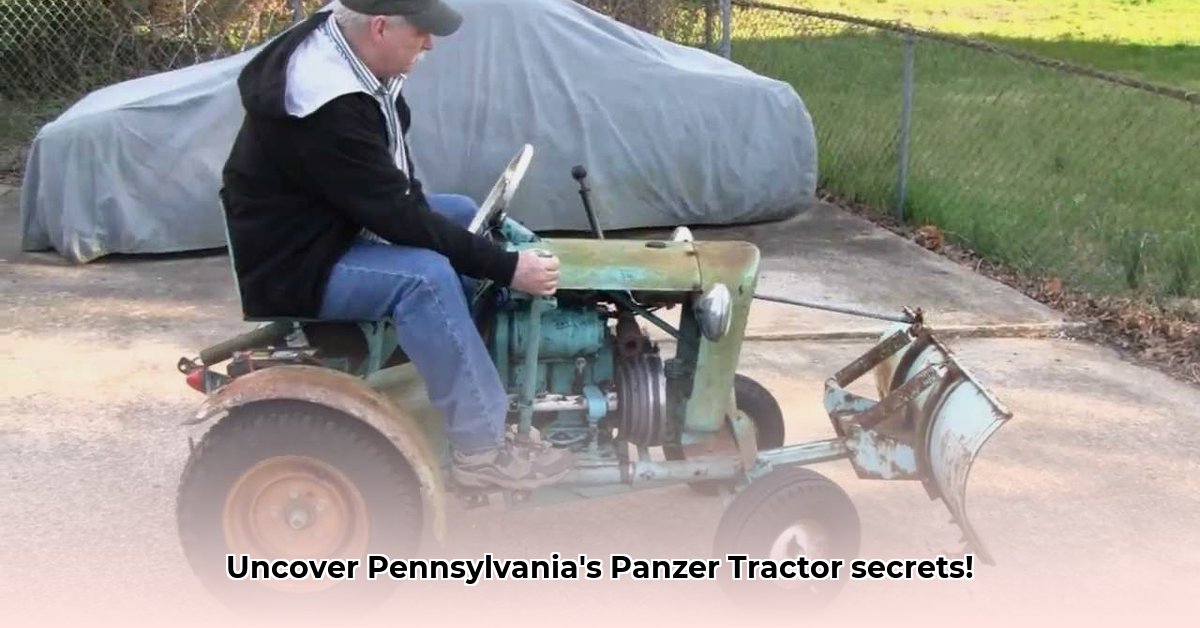
Pennsylvania Panzer Tractor: A History of Ingenuity and Obscurity
The Pennsylvania Panzer tractor—a name that evokes images of robust power—holds a fascinating, albeit somewhat obscure, place in agricultural history. This isn't a tale of mass production and global dominance; rather, it's a story of ingenuity, small-scale manufacturing triumph, and ultimately, a poignant example of the challenges faced by niche players in the agricultural machinery market. This guide delves into the Panzer's history, explores its diverse models, and provides guidance for enthusiasts seeking to restore and maintain these unique machines. Did you know that even today, locating parts for a Pennsylvania Panzer can be an adventure in itself?
Key Takeaways:
- The Pennsylvania Panzer's origins trace back to a Maryland backyard project, highlighting the power of individual innovation in engineering.
- Despite limited production runs, several model variations exist, each posing unique identification challenges for collectors.
- Restoring a Panzer tractor demands patience, resourcefulness, and a collaborative spirit among enthusiasts, turning the restoration process into a meaningful community project.
From Backyard Vision to Limited Production: The Panzer's Genesis
The Pennsylvania Panzer's journey began not in a large-scale factory, but in a Maryland backyard. James A. Clark, seeking a more efficient mowing solution, conceived the original Copar Panzer tractor in College Park, Maryland. This initial design, a testament to the power of a simple problem sparking innovation, laid the foundation for a surprisingly diverse line of tractors.
Early production, aided by Ahrendt Instrument Co., was confined to College Park. However, rising demand quickly outstripped capacity, prompting a strategic relocation to Laurel, Maryland. This expansion allowed for increased production but also contributed to the model variations we see today – a classic example of how market pressures can shape product development. Think of the variations as a fascinating evolutionary record written in steel and cast iron. The differences in engine types, tire sizes, and other specifications, while thrilling for collectors, contribute to the challenges of precise model identification.
Deciphering the Models: A Collector's Challenge
The Pennsylvania Panzer boasts a surprisingly diverse array of models, each possessing a unique combination of horsepower, design features, and capabilities. Unfortunately, precise production figures remain largely unknown for most models, adding to their mystique and desirability among collectors. For example, the T55 model is coveted as the "holy grail" by many enthusiasts, transforming the search for even basic information about it into a thrilling pursuit. This lack of detailed records, while frustrating for historical accuracy, paradoxically adds to the hobby's charm: every discovery feels like a small victory in a treasure hunt.
| Model | Engine Type | Horsepower (Estimated) | Notable Features | Approximate Production (Estimated) |
|---|---|---|---|---|
| T50 | Likely Gasoline | 50-60 HP | Basic design, possibly simpler features | Unknown |
| T55 | Possibly Modified | 55-65 HP | Rarer, potentially enhanced components | Extremely Rare |
| T60 | Perhaps Diesel | 60-70 HP | Possibly more robust, increased capabilities | Unknown |
Note: The data provided in this table represents current understanding and should be viewed as preliminary. Further research is needed to refine engine specifications and production numbers.
A Brief but Impactful Mark: The Panzer's Legacy
The Pennsylvania Panzer's lifespan was relatively short. Company mergers and acquisitions ultimately led to the demise of the brand. Yet, despite its brief existence, its influence on agricultural technology is undeniable. Why did such an innovative tractor fade from the market? This question remains a subject of ongoing research, exploring the business decisions and market factors that potentially contributed to its decline.
Restoring a Piece of History: A Practical Guide
Restoring a Pennsylvania Panzer demands patience, resourcefulness, and a collaborative spirit within the collector community. The primary hurdle is often parts acquisition. However, this challenge only intensifies the sense of accomplishment for those who succeed.
Step-by-Step Restoration Guide:
Precise Identification: Begin by meticulously identifying your tractor's model using online resources, and discussion forums.
Part Acquisition: This usually necessitates persistence. Online searches, auctions, and networking with other collectors are essential strategies.
Documentation: Gather any available factory manuals or photographs related to your model to aid in the restoration.
Expert Assistance: Consult with experienced mechanics or restoration professionals familiar with Panzer tractors when facing difficult mechanical issues.
The Future of the Pennsylvania Panzer: Preserving History
The Pennsylvania Panzer's future hinges on the dedication of its collectors and enthusiasts. Continued historical research, parts reproduction efforts, and the development of comprehensive restoration guides are crucial for preserving this unique aspect of American agricultural history. By engaging with the community and actively contributing to knowledge sharing, you'll play a key role in ensuring the Pennsylvania Panzer's story continues to be told.
Identifying Rare Copar Panzer Tractor Models: A Detailed Approach
Identifying rare Copar Panzer tractor models requires a meticulous and multi-faceted approach. The challenge lies in the incomplete historical records and the varied production methods employed. The following steps offer a systematic way to uncover your tractor's identity.
Key Steps: 1. Document Everything: Thoroughly photograph and document all aspects of the tractor. 2. Serial Number Analysis: Carefully examine the serial number (if present), cross-referencing it with any available records. 3. Engine Identification: Identify the engine type (e.g., Briggs & Stratton, Clinton, Kohler) and compare it to known models. 4. Pulley Examination: Note the pulley material (cast iron or aluminum), as this can indicate the tractor's age and model. 5. Jackshaft Housing Examination: Look for markings and casting details on the jackshaft housing which may identify manufacturing location and even specific model modifications. 6. Community Engagement: Participate in online forums and discussion groups to share your findings and compare your tractor to known examples.
By combining these research strategies and tapping into the expertise of the collector community, you will significantly improve your chances of accurately identifying your rare Pennsylvania Panzer tractor. Remember that persistent investigation and collaborative efforts are key to uncovering the rich history of these unique machines.